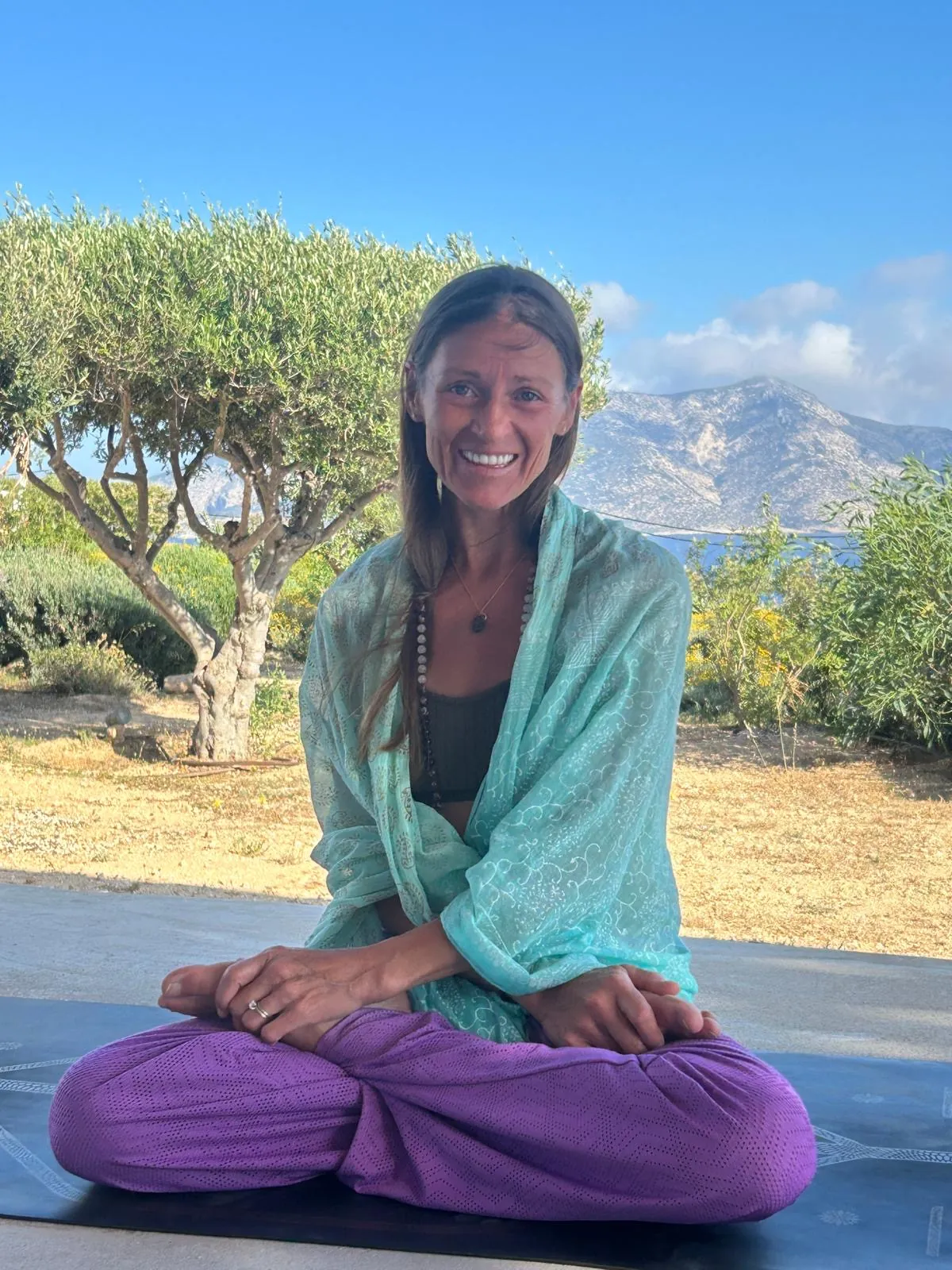
A guide to teacher trainingThere is more depth in yoga than you have been able to reach.Salt Lake City, Utah

A guide · Salt Lake City, Utah

Yoga teacher training in Utah,
without the brochure.

You are thinking about a teacher training, and every school’s page sounds roughly the same. This guide answers the questions people ask before they choose: what it costs, which length to start with, weekends or an intensive, and how you go from practicing to teaching in Salt Lake City.

We run a training, so we have a stake in your answer. We wrote this to be useful even if you choose someone else.

By Rachel Cieslewicz, C-IAYT25+ years training teachersYogaSoul, founded 2013Updated
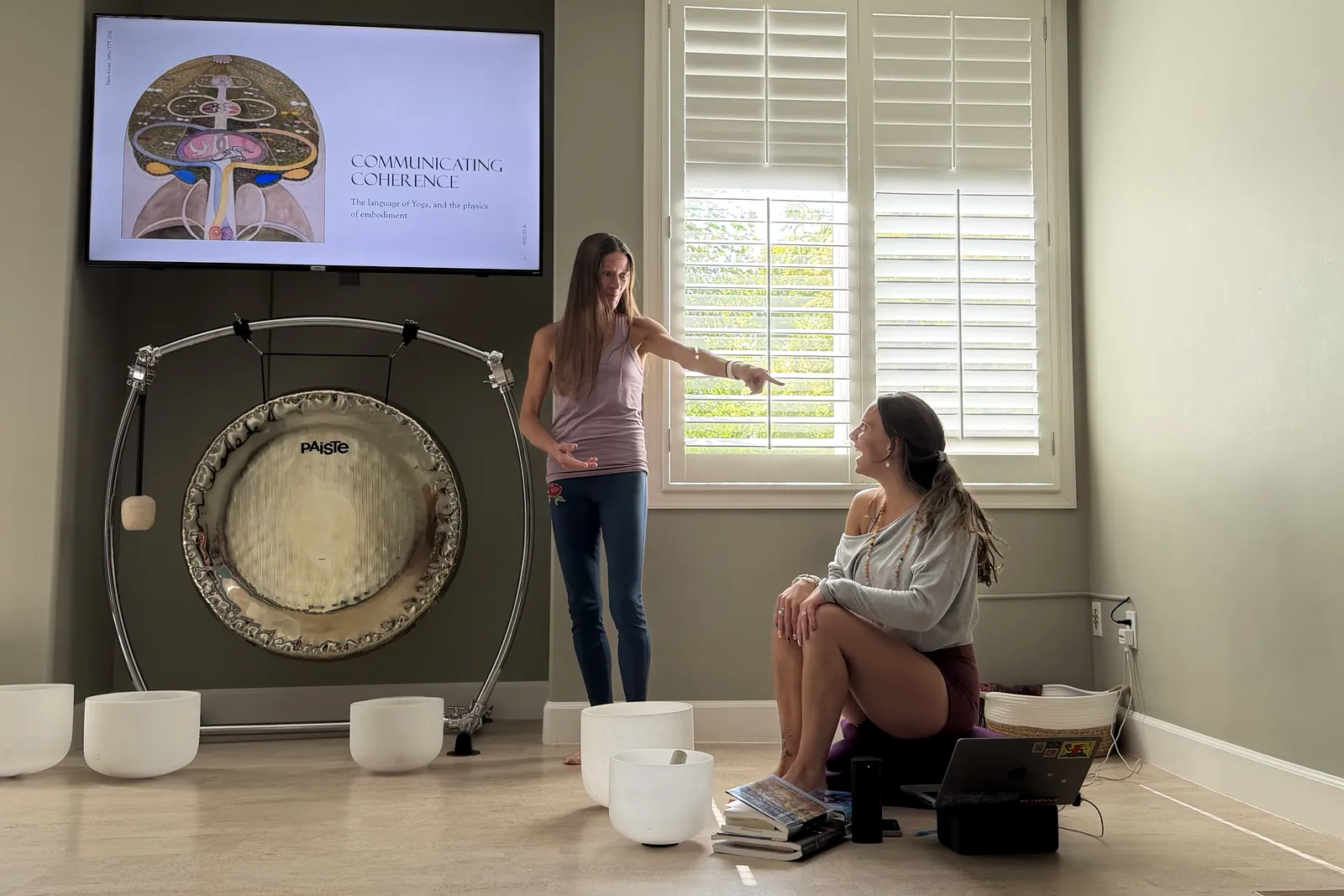
Rachel Cieslewicz teaching a teacher training session beside the gong at the YogaSoul shala in Salt Lake City
A teacher training session · East Millcreek

01 · Cost

How much does yoga teacher training cost in Utah?
And what should the price include?

A 200- or 300-hour training is a significant purchase. The best way to compare prices is to add up everything you will have spent by the last weekend, not just the number at the top of the page.

What Utah trainings charge. We read the published prices of teacher trainings across Utah in September 2026. In-person and hybrid 200-hour trainings ran from about $1,990 to $4,200, fully online programs started under $1,000, and 300-hour trainings ran from about $2,800 to $4,700. Ours sits in the upper middle.

The difference is rarely the certificate. It is who actually teaches you, how many people share the room, what is included, and how much of the training happens on a screen. Compare those, and the prices start to make sense.

YogaSoul 200-Hour

$3,300All in, except about $120 of books
  • Seven weekend immersions, Feb 5 to May 9, 2027
  • Guest teacher workshops
  • Mentorship with Rachel throughout
  • Training manual and course materials
  • Optional group classes at Rachel’s shala
  • World Yoga Federation 200-Hour certification

$500 deposit holds your place, is applied to tuition, and is not refundable. Anything paid beyond it is refundable for 3 business days after signing. After that, a one-time deferral to the next training instead of a refund. Payment plans are set individually with Rachel. See the 200-Hour

YogaSoul 300-Hour

$4,700All in, except books
  • Nine weekends, Feb 5 to Jun 27, 2027
  • Weekly teaching
  • Two private mentorship sessions
  • World Yoga Federation 300-Hour certification
  • Credit toward a 500-Hour designation

$500 deposit, applied to tuition. Requires a 200-hour from any school. See the 300-Hour

Costs people forget to ask about

  • A required studio or gym membership. Some Utah programs ask for one on top of tuition.
  • Books and the training manual. Ask for the reading list and a rough total before you enroll.
  • The certificate itself, which should be in the price
  • Classes you are expected to take while you train, if they are not included
  • Make-up fees, if you miss a session and have to repeat it
  • Registry fees, only if you choose to register. Yoga Alliance, for example, charges a $50 application fee and $65 a year.
  • Liability insurance once you start teaching, usually renewed each year
  • Gas and parking for every training weekend, or lodging if you travel in
  • Time away from work, which is a cost even when it is not on the invoice

Worth a second look

  • A price that does not say what it leaves out
  • A lead teacher named on the page who is not in the room most weekends
  • No stated cap on the cohort
  • A deposit or refund policy you cannot find in writing
  • Pressure to decide before your questions are answered

Ours, stated plainly. The $500 deposit is not refundable, because it holds a seat in a small group. If you are not accepted, everything comes back. Anything you paid beyond the deposit is refundable for 3 business days after signing. After that you owe the full tuition, even on a payment plan, but you get one deferral to the next training if you ask at least a month ahead ($200 fee). Tuition must be paid in full to receive your certificate. Books are extra. Everything else on the 200-Hour list above is inside the $3,300. If something is unclear, write to Rachel before you pay anything.

Checkout runs through Stripe, which takes cards, Apple Pay, Amazon Pay, Cash App Pay, bank transfer and Klarna.

02 · 200-hour or 300-hour

200-hour or 300-hour.
One comes first.

The 200-hour is the foundation. The 300-hour is advanced study for people who already hold a 200-hour or equivalent. If you do not have a 200-hour yet, your decision is already made.

200-Hour300-Hour
Who it is forPractitioners who want to understand the practice properly, whether or not they plan to teachTeachers who want more depth than their first training could give them
PrerequisiteA steady practice. You do not need to be advancedA 200-hour from any school
What you studyPostures, prāṇāyāma, meditation, anatomy, ethics, sequencing, and philosophyAdvanced study built on the foundation you already have
TeachingFrom the first weekendEvery week
At YogaSoul7 weekends, Feb 5 to May 9, 2027. Cohort of 12 at most9 weekends, Feb 5 to Jun 27, 2027. Cohort of 8 at most
Cost at YogaSoul$3,300, plus about $120 of books$4,700, plus books
CertificationWorld Yoga Federation 200-HourWorld Yoga Federation 300-Hour, plus credit toward a 500-Hour designation

What changes at 300 hours

The room gets smaller and the attention gets closer. At YogaSoul the cohort caps at eight instead of twelve, you teach every week, and you have two private mentorship sessions with Rachel. The questions move from how to lead a class to why you teach the way you do.

There is no required gap between the two. YogaSoul asks only that you hold a 200-hour. Many people teach for a while first, so they arrive with real questions.

The 500-hour pathway

A 500-hour designation is often not one long training. Many teachers reach it by adding a 300-hour training to a 200-hour they already hold. At YogaSoul, completing the 300-Hour gives you credit toward a 500-Hour designation.

If you did your 200-hour elsewhere, that is fine. The 300-Hour accepts a 200-hour from any school. Registries set their own rules, though. Yoga Alliance, for example, counts a 200-hour and a 300-hour from different schools only when both schools are registered with it, and it also asks for teaching hours. If a registry listing at the 500-hour level matters to you, check its requirements before you enroll anywhere.

03 · Format

Weekends or a two-week intensive.
We run weekends. Here is the trade.

An intensive puts the whole training into a short, continuous block of full days, often away from home. A weekend format spreads it across months. Either one is a big decision. They suit different lives.

Weekends suit you if

  • You have work, family, or a life that cannot pause for weeks
  • You want time to practice and read between sessions
  • You want to teach real people while you are still in training
  • You learn by returning to something, not by cramming it
  • You live within reach of Salt Lake City

An intensive may suit you better if

  • You cannot commit to seven or nine weekends across several months
  • Your weekends are not yours, because of shift work or a weekend job
  • You live far away and travelling every other weekend is not realistic
  • You want to step fully out of daily life while you train
  • You have a fixed deadline and need to finish quickly

The honest cost of each

An intensive is tiring in a way that is hard to picture beforehand. There is little time for the material to settle before it is over, and you rarely teach an ordinary class in the middle of it.

A weekend format asks for something else. It asks for months of commitment, and a life that will interrupt you at least once along the way. Tell Rachel early when it does, and she will help you find a way through it.

What weekends look like here

The 200-Hour is seven weekends: Friday 5 to 9pm, then Saturday and Sunday 9 to 5. Between weekends you practice four to six times a week, read for about twenty minutes a day, observe classes, and teach.

It is in person in East Millcreek, Salt Lake City. It is not online and it is not an intensive. If that schedule will not fit your year, an intensive elsewhere may be the better choice, and we would rather you knew that now.

04 · Online or in person

Is online yoga teacher training worth it?
For some people, yes.

Online trainings have opened teacher training to people who could never have reached one otherwise. They are also a different experience from learning in a room. Here is the honest trade, so you can decide which one your life calls for.

What online does well

  • It usually costs far less than an in-person training
  • You can study around shift work, young children, or a town with no training nearby
  • You can replay a lecture until it makes sense
  • Philosophy, anatomy and reading carry over to a screen well

What a screen cannot do

  • Hands-on assists, both receiving them and learning to give one safely
  • Being watched while you teach real people in a room, then hearing what your teacher saw
  • A cohort that practices, struggles and finishes alongside you
  • Learning to read a whole room at once, which is most of what teaching asks

How to decide. If no in-person training is within reach, a good online program is far better than none. Look for live sessions rather than recordings alone, and for a teacher who watches you teach on video and responds. If you can get to a room, even with a drive, the parts of teaching that are hardest to learn are learned there. YogaSoul trains in person only, for that reason. Our in-person 200-hour teacher training in Salt Lake City is where most people start, and if your first training was online, the 300-hour advanced teacher training accepts a 200-hour from any school.

05 · Coming from outside Salt Lake City

Coming from Ogden, Provo or Park City?
Here is what the drive looks like.

YogaSoul's trainings meet in person on weekends in East Millcreek, on the east side of Salt Lake City. The exact address comes by email once you enroll. For a weekend format, whether it works from where you live mostly comes down to the drive.

  • Lehiabout 30 minutes
  • Park Cityabout 35 minutes
  • Ogdenabout 40 minutes
  • Provo and Oremabout 45 minutes
  • Loganabout 1 hour 30 minutes
  • St. Georgeabout 4 hours 30 minutes

Typical drives to Salt Lake City without traffic, from mapping estimates. Friday evening traffic on I-15 and winter weather in the canyons can add a good deal.

Utah County, Park City and Ogden

From Lehi, Provo, Orem, Park City or Ogden, a weekend training is a commute rather than a move. You drive in Friday evening, sleep at home, and come back for Saturday and Sunday. If someone in your cohort lives near you, sharing the drive helps.

Logan and St. George

From Logan, seven or nine weekends of driving is a real commitment, so count the miles honestly before you enroll. From St. George, a Salt Lake City weekend training is not realistic for most people. A training closer to home, or an intensive you travel to once, may fit your life better, and that is a good choice.

What to ask any program about travel weekends

  • Is every session in the same place, and where do I park?
  • When does each day start and end, so I can plan the drive?
  • If snow or a canyon closure keeps me home, is there a make-up, and does it cost extra?
  • Are any sessions online, or is every one in person?
  • If I need to stay over, can you point me to somewhere nearby?

If you are weighing the drive for the 200-hour weekend training, write to Rachel and tell her where you are coming from.

06 · Becoming a teacher

How to become a yoga teacher
in Salt Lake City.

There is a common route from practicing to teaching. It has five steps, and none of them require you to be advanced or flexible.

Practice steadily first

Practice regularly with a teacher you trust, long enough to know what you are asking for. What you need is curiosity about why the practice works, not a particular posture.

Choose a training

Compare length, format, cohort size, who actually teaches, and total cost. The seven questions below do most of the sorting.

Complete it and certify

A 200-hour training is the usual first credential. At YogaSoul you finish with a World Yoga Federation 200-Hour certification.

Sort out the practical side

Places that hire teachers often ask you to carry your own liability insurance, and some ask for current CPR certification. Ask the places you want to teach what they require, so you have it in hand before your first class.

Teach your first classes

Start small and start often. A class for friends, a community class, a class at your workplace. Early experience matters more than the first room being perfect.

Certification bodies, explained plainly

World Yoga Federation. YogaSoul’s trainings certify through the World Yoga Federation, a lineage-rooted certifying body. When you complete the training you receive a WYF 200-Hour or 300-Hour certification. Rachel is a World Yoga Federation Grandmaster. How the World Yoga Federation and Yoga Alliance compare.

Yoga Alliance. Yoga Alliance is a US-based nonprofit membership association that keeps a registry. Schools that meet its standards can list as Registered Yoga Schools. Teachers who complete training at one can apply to register as Registered Yoga Teachers, such as RYT-200, and RYT-500 also asks for teaching experience. Registration is voluntary and involves an application fee, annual dues, and ongoing continuing education.

The two are different kinds of thing. A certification says you completed a particular training. A registry listing says you meet that registry’s standards and remain listed with it, and it is not an accreditation. World Yoga Federation graduates can get insured and get hired. The two are separate systems, and one doesn’t transfer into the other in either direction.

Neither is a government license. Utah does not require a state license to teach yoga. Studios set their own hiring requirements, and some ask about registry listing while others do not, so ask the places you hope to teach.

After you graduate: teaching in Utah

New teachers usually start in yoga studios across the Salt Lake Valley and Utah County, gyms and fitness clubs, community and recreation centers, workplaces that offer wellness classes, and private sessions in people’s homes.

Many begin with a mix. A community class gives you repetitions. A regular slot somewhere gives you a room that expects you back. Insurance is available to World Yoga Federation graduates, and plenty of places that hire in Utah never ask about Yoga Alliance.

What it pays. Federal wage data does not count yoga teachers on their own. In the broader category of fitness trainers and instructors, the median wage in Utah was $21.54 an hour in May 2025, according to the Bureau of Labor Statistics. Yoga is often paid by the class, and many teachers teach a few classes a week, so treat that figure as a loose reference point rather than a promise.

YogaSoul’s teacher training officially began in 2013. Rachel and Eric brought it to Centered City Yoga (CCY) when they bought that Salt Lake City studio in 2017, and took it with them when they sold CCY in 2025. Today the trainings run in person in East Millcreek.

07 · Choosing

How to choose.
Questions, asked out loud.

Price and schedule narrow the list. They do not tell you which training will actually teach you. These questions do more of that work. We wrote them for any school, including ours.

Who is actually in the room every weekend?

A program can carry one teacher’s name and be taught by several. Guest teachers add a great deal. Ask who will know you by the end of the first month.

How many people were in your last cohort?

Ask for the number, not the word small.

When do I stand at the front of a room for the first time?

Some trainings wait until the end. At YogaSoul it is the first weekend.

And four more

The rest are the ones most schools would rather you did not ask. They are in the full list, with what each answer tells you.

Rachel Cieslewicz, lead teacher at YogaSoul

Who wrote this

Answered by the teacher
who leads the training.

Rachel Cieslewicz leads YogaSoul’s trainings. Guest teachers add to them. She is a C-IAYT certified yoga therapist and a World Yoga Federation Grandmaster, and her lineage runs to Krishnamacharya. She and Eric are both authorized to teach Ashtanga primary and second series, through Manju Jois, and Rachel also studied Vinyasa Krama with Srivatsa Ramaswami.

300+Teachers trained
25+Years training teachers
2013YogaSoul founded

Still deciding

Questions people ask first.

How long does it take to become a yoga teacher?

A 200-hour training is the usual first step. Weekend formats run across several months and intensives take a few weeks. YogaSoul’s 200-Hour runs seven weekends, from February 5 to May 9, 2027, and you teach from the first weekend.

How much does yoga teacher training cost in Utah?

When we read published prices in September 2026, in-person and hybrid 200-hour trainings in Utah ran from about $1,990 to $4,200, fully online programs started under $1,000, and 300-hour trainings ran from about $2,800 to $4,700. YogaSoul’s 200-Hour is $3,300 plus about $120 of books, and the 300-Hour is $4,700 plus books.

Do I need to be advanced or flexible?

No. That belief talks good candidates out of applying. You need a steady practice and curiosity about why it works. The training meets you where you are.

Is teacher training worth it if I do not want to teach?

It can be. Some people come because yoga changed something for them and they want to understand why. If teaching becomes the thing later, the foundation is already there.

Is YogaSoul’s training online?

No. Both trainings are in person in East Millcreek, Salt Lake City, on weekends. If you need an online or self-paced training, this is not it.

Can I do YogaSoul’s training if I live in Ogden, Provo or Park City?

Yes. The trainings meet on weekends in East Millcreek, Salt Lake City. The drive from Lehi, Park City, Ogden, Provo or Orem is usually under an hour without traffic, and from Logan it is about an hour and a half. The exact address comes by email once you enroll.

Is YogaSoul’s training registered with Yoga Alliance?

No. YogaSoul’s trainings are certified by the World Yoga Federation. Yoga Alliance is a membership registry, not an accrediting body, and listing with it is optional. World Yoga Federation graduates get insured and get hired to teach. The two are separate systems: one doesn’t transfer into the other, in either direction. If a studio you have in mind asks for Yoga Alliance by name, write to Rachel before you enroll and she’ll give you a straight answer.

Can I pay in installments?

Yes. A $500 deposit holds your place and is applied to tuition. It is not refundable unless you are not accepted, in which case everything is refunded. Anything paid beyond the deposit is refundable for 3 business days after signing. After that you are responsible for the full tuition, even on a payment plan, but you can defer once to the next training if you ask at least a month before it starts ($200 fee). Payment plans for the rest are set individually with Rachel, based on your needs. Tuition must be paid in full to receive your certificate.

Can I take the 300-Hour if my 200-hour was somewhere else?

Yes. The 300-Hour requires a 200-hour from any school. It runs nine weekends from February 5 to June 27, 2027, with a cohort of eight at most.

How much do yoga teachers make in Utah?

There is no official figure for yoga teachers alone. The closest federal category, fitness trainers and instructors, had a median wage of $21.54 an hour in Utah in May 2025, according to the Bureau of Labor Statistics. Yoga is often paid per class and many teachers work part time, so your own pay can land well above or below that.

Did YogaSoul’s training run at Centered City Yoga (CCY)?

Yes. YogaSoul’s teacher training began in 2013. When Rachel and Eric bought Centered City Yoga (CCY) in 2017, they brought the training there, and when they sold CCY in 2025, they took it with them. Every teacher training at CCY in those years was YogaSoul’s. It is the same program and the same lead teacher.

A YogaSoul training weekend at the shala in Salt Lake City

When you are ready to look closer,
start with the one that fits.

The 200-Hour is where most people begin. The 300-Hour is for teachers who already hold a 200-hour. If you are not sure which, or whether this is your year, write to Rachel. She reads every email herself and will tell you honestly.

Stay Connected

Keep the practice moving,
even between visits.

Retreat announcements, teacher training updates, workshop invites, and practice inspiration, straight to your inbox. No noise. Just the good stuff.

The next retreat could be one you experience, or one you hear about after it fills.

Rachel and Eric write it. Not a marketing team, not a scheduler. Rachel has been formally teaching and studying for 28+ years and training teachers for 25+, and most of what goes out is whatever she is actually working through that month, plus first word on retreats and cohort openings before they are posted anywhere.

28+ Years Formal Teaching and Studying 300+ Teachers Trained WYF Certified School

One email at a time, from an address you can reply to.

This site is protected by reCAPTCHA and the Google Privacy Policy and Terms of Service apply.